
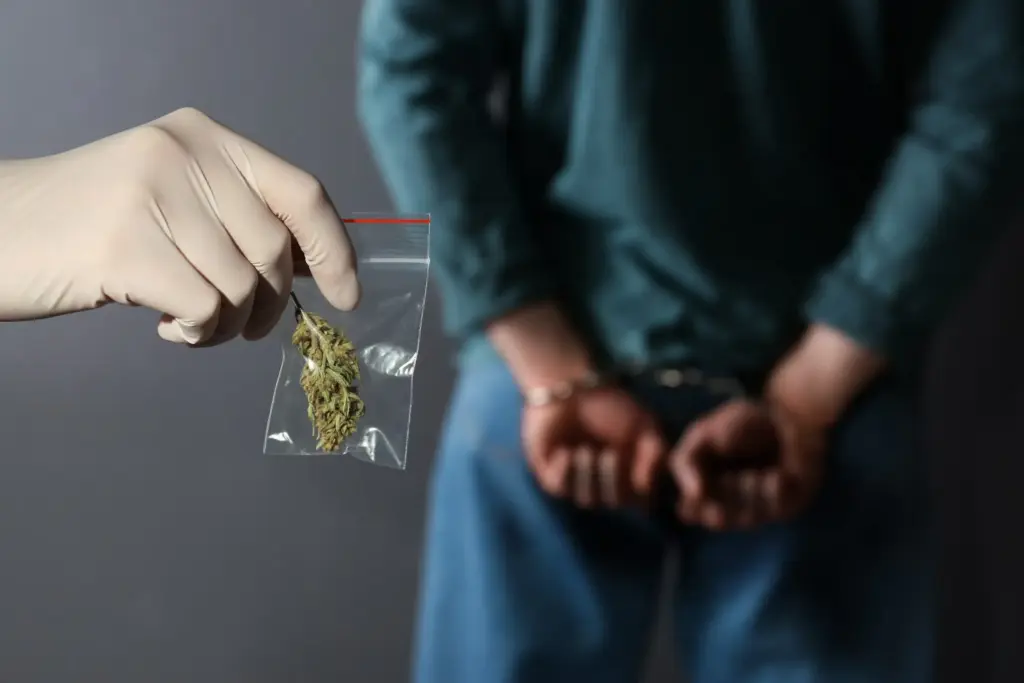
The difference between drug possession and drug trafficking in Nevada is not whether you sold anything. It’s a number on a scale: 100 grams for most controlled substances — just 28 for fentanyl — and at that weight, Nevada charges trafficking whether the drugs were for sale, for sharing, or entirely for you. Below those numbers sits a ladder of possession charges that runs from a dismissable first offense to serious felonies, with a third, separate crime — possession for the purpose of sale — living in between. Here’s the whole map, with the current numbers.
Request a Legal Case EvaluationRequest a Legal Case Evaluation
Possession vs. Trafficking: It Comes Down to Weight
Nevada trafficking under NRS 453.3385 is a weight crime, not a conduct crime. The State doesn’t have to prove you sold, transported, or intended anything — possessing the threshold amount is the offense, and the amount is measured by the aggregate weight of the whole mixture, not the pure drug inside it. Cut a substance with filler and the filler counts against you. That one rule reshapes cases: a defendant holding mostly-cut product can face trafficking weight while holding a fraction of the actual drug.
Everything below the trafficking floor is possession — graded by the same scale — unless the State believes it can prove you meant to sell, which is a different statute with different elements. Three crimes, one axis: grams.
The Current Nevada Weight Ladder (Schedule I/II Drugs, Non-Marijuana)
| Amount | Charge | Level & penalty |
|---|---|---|
| Under 14 g | Simple possession (1st/2nd offense) | Category E felony — with MANDATORY deferred judgment on your consent (see next section) |
| Under 14 g (3rd offense, or 2+ prior drug convictions) | Simple possession | Category D felony, fine up to $20,000 |
| 14 to under 28 g | Low-level possession | Category C felony (1–5 years per NRS 193.130) |
| 28 to under 42 g | Mid-level possession | Category B felony — 1–10 years, fine up to $50,000 |
| 42 to under 100 g | High-level possession | Category B felony — 2–15 years, fine up to $50,000 |
| 100 to under 400 g | Low-level TRAFFICKING | Category B felony — 2–20 years, fine up to $100,000 |
| 400 g and up | High-level TRAFFICKING | Category A felony — life with parole eligibility after 10 years, or a definite 25 years with parole after 10; fine up to $500,000 |
Read the ladder’s shape: Nevada redrew these lines in 2019 (AB 236), moving the trafficking floor from the old low thresholds up to 100 grams — which is why so many older articles, and even some firm websites, still describe ’28 grams equals trafficking’ law that no longer exists. Between 28 and 100 grams today you’re facing serious possession felonies, not trafficking. The distinction is not cosmetic: the charges carry different ranges, different labels, and different leverage. What happens above the 100-gram line — the sentencing landscape at each tier, the negotiation realities, the trial calculus — is its own world, covered in depth on our drug trafficking defense page.
Under 14 Grams, First or Second Offense: You May Not Become a Felon at All
The ladder’s bottom rung is the one worth knowing best. For a first or second simple-possession offense under 14 grams, Nevada law doesn’t just permit a second chance — it requires one: under NRS 176.211, the court shall defer judgment when the defendant consents, sending the case into treatment-style conditions instead of a conviction. Complete them and the charge is dismissed. This is mandatory-if-you-ask relief, and people plead guilty without invoking it more often than you’d hope — sometimes because nobody at the table explained that the statute’s word is shall. If your case lives on this rung, the fight is about protecting that off-ramp — our drug possession defense page covers the full framework.
Fentanyl Runs on Its Own, Lower Ladder
In 2023, Nevada carved fentanyl out of the general scheme. Under NRS 453.3387, trafficking in illicitly manufactured fentanyl, its derivatives, or any mixture containing it starts at 28 grams: 28 to under 42 grams is trafficking (category B, 1–10 years), 42 to under 100 grams is high-level trafficking (category B, 2–15 years), and from 100 grams the general tiers above take over. Because mixture weight controls, pills pressed with filler reach 28 grams quickly — a sandwich bag of counterfeit pills can be a trafficking case. One thing that did NOT happen: the much-publicized 2025 push to drop the fentanyl threshold to 4 grams failed to pass, in both the regular and special sessions. Articles claiming a 4-gram law are describing a bill, not a statute.
The Third Crime: Possession for the Purpose of Sale
Between simple possession and trafficking sits NRS 453.337 — possessing a schedule I or II drug with intent to sell it, at any weight. Because intent is the element, these cases are built on circumstances: scales, baggies, large cash, text messages, traffic to the door. And because circumstances have innocent explanations, these are contestable cases — the same scale that ‘proves’ sales to a detective proves a buyer protecting themselves from being shorted. The ladder runs category D for a first offense, category C for a second (or a first with a prior drug felony), and category B with 3–15 years for a third. For schedule III–V substances, NRS 453.338 runs a step lower. When prosecutors can’t reach trafficking weight, sale-purpose charges are how they raise the stakes — which makes attacking the intent evidence the center of the defense.
How These Cases Are Fought
Weight cases get fought on weight: how the aggregate was measured, whether separate stashes were improperly combined, chain of custody on the substance, and lab methodology — because at the 100-gram and 28-gram lines, grams are the whole case. Possession cases get fought on possession itself: ‘constructive possession’ — drugs in a shared car, a shared apartment, a borrowed jacket — requires proving knowledge and control, and proximity alone isn’t guilt. And nearly every drug case gets fought on the search: traffic stops stretched past their purpose, consent that wasn’t voluntary, warrants with defects. Suppress the drugs and there is no weight to ladder. And because the entire scheme is a ladder, the lines themselves are negotiation terrain: a case charged at 105 grams looks very different after a successful challenge to how two separate quantities were aggregated, and a sale-purpose charge without solid intent evidence has a way of becoming the possession count it always was. The gram lines that create the State’s leverage create ours too — every threshold is something to fight over. Our Las Vegas drug crimes defense team starts every file with all three questions, because the right one changes by the case.
The Marijuana Exception
Marijuana runs on separate rules. Under NRS 678D.200, adults 21 and over may lawfully possess up to 2.5 ounces of flower or a quarter ounce of concentrate. Criminal exposure survives at the edges: possession by anyone under 21, amounts above the legal limits, unlicensed sale, and large-scale marijuana trafficking under its own statute (NRS 453.339) — which is expressly excluded from the general trafficking scheme described above. If your case is marijuana, none of the gram figures in the table apply to you; the marijuana rules do.
Possession vs. Trafficking in Nevada
Frequently Asked Questions
Is 100 grams automatically trafficking, even if it was all for personal use?
At 100 grams (28 for fentanyl), Nevada charges trafficking on weight alone — personal use is not a defense to the trafficking element, and no sale needs to be proven. The defense in trafficking cases runs through the weight itself, the possession element, and the search — not through what you intended to do with it.
Can I get probation for a drug charge?
For simple possession, yes — probation is available, and for first or second offenses under 14 grams the mandatory deferral can end in outright dismissal. As charges climb toward sale-purpose and trafficking levels, sentencing options narrow sharply and depend on the specific charge and record — that’s a conversation to have with counsel about your exact rung of the ladder, not a blog answer.
Why is fentanyl treated differently?
The Legislature set a lower trafficking floor for fentanyl in 2023 — 28 grams instead of 100 — reflecting its potency. Combined with the mixture-weight rule, that floor arrives fast in counterfeit-pill cases. The proposed 4-gram threshold, though, never became law; 28 grams is the current line.
The drugs weren’t mine — they were in the car. Am I guilty?
Not automatically. The State must prove possession — knowledge of the drugs and control over them — and ‘constructive possession’ in shared spaces is one of the most litigated issues in drug cases. Who owned the car, where the drugs sat, whose prints and statements exist: those facts, not mere presence, decide it.
Know Your Rung Before You Make Any Decision
Every choice in a drug case — take the deferral, fight the search, negotiate, go to trial — depends on where the gram count puts you, and the map for drug possession vs. trafficking in Nevada is exactly the kind of thing you want current, not folklore. If you or someone you love is holding a charge on any rung of this ladder, talk to De Castroverde Law Group before deciding anything. The consultation is free and confidential.
Request a Legal Case EvaluationRequest a Legal Case Evaluation