
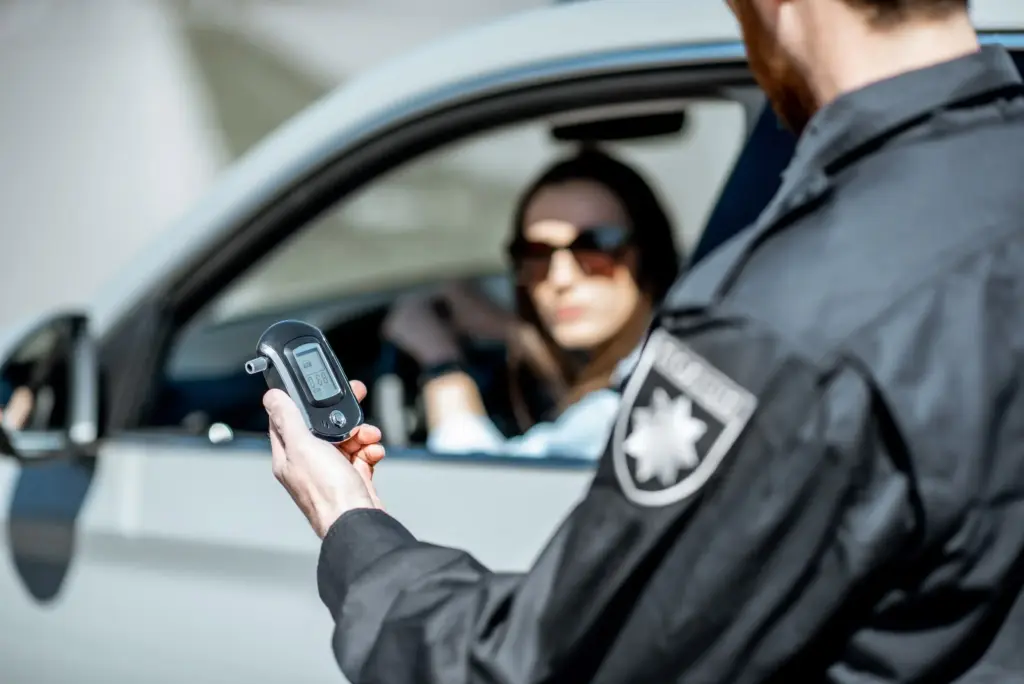
If you refuse a breathalyzer in Nevada, two things are true at once: you haven’t committed a new crime, and you’ve just triggered consequences that are in some ways harsher than failing the test. Your license can be revoked for a full year, the refusal itself can be used against you in court, and police can still get your blood with a warrant. If you’re reading this after an arrest — yours or a family member’s — here is exactly how it works, and where a defense begins.
Request a Legal Case EvaluationRequest a Legal Case Evaluation
Nevada’s Implied Consent Law — What Refusing a Breathalyzer Actually Means
Under NRS 484C.160, driving on a Nevada road — or on premises the public can access — is itself an agreement: if an officer has reasonable grounds to believe you’re impaired, you’ve already consented to an evidentiary test of your blood or breath. The officer is required to warn you that refusing means losing your license. A few details inside the statute matter more than most pages tell you: if alcohol is the issue, you can generally insist on a breath test instead of blood when breath testing is reasonably available; if marijuana is suspected, the officer can require blood; and the State is limited to three samples within five hours of arrest. Two humane exceptions worth knowing: people with hemophilia or on anticoagulant heart medication are exempt from blood tests, and a driver who prefers blood over breath can request it — though the statute makes you cover the testing costs if you’re convicted.
Implied consent is why ‘I refuse’ doesn’t work the way people hope. You can physically decline — but the law treats the license in your wallet as already-given permission, and it prices the refusal accordingly.
Two Different Tests, Two Different Refusals
Here is the distinction most websites blur. The little handheld device at the roadside is a preliminary breath test (PBT) under NRS 484C.150 — a screening tool whose results generally can’t be used to convict you, only to justify the arrest. The evidentiary test comes after arrest, at the station or a medical facility, on calibrated equipment — that one is the case evidence.
Refusing them has different consequences. Refuse the PBT and, if grounds otherwise exist, the statute directs the officer to arrest you and take you to the evidentiary test — since a 2021 amendment, PBT refusal by itself no longer triggers the old automatic license seizure many attorney sites still describe. Refuse the EVIDENTIARY test and the license consequences below land in full. Knowing which test you refused is the first question we ask, because the legal fallout is not the same.
The Price of Refusing: What You’re Actually Facing
| What happened | License consequence | Statute |
|---|---|---|
| Refused the evidentiary test — first time | Not eligible for a license for 1 YEAR | NRS 484C.210(1) |
| Refused again (prior refusal revocation within 7 years) | Not eligible for 3 YEARS | NRS 484C.210(1) |
| Took the test and failed (0.08+ or prohibited substance) | 185-day revocation | NRS 484C.210(2) |
Three mechanics make this worse than the table looks. First, revocation periods run consecutively, not concurrently — a refusal revocation stacks on top of any revocation from the DUI case itself. Second, it happens immediately: the officer seizes your license on the spot as the DMV’s agent and may hand you a 7-day temporary. Third, driving again during revocation generally means an ignition interlock as a condition. You do have hearing rights — an administrative DMV hearing first, then judicial review of its outcome — and the deadline to request them is short, which is why the week after arrest matters so much. Miss the window and the revocation simply happens, uncontested, no matter how weak the stop was. (Separately, the criminal side got tougher in 2025: SB 309 raised repeat-offense minimums — our Nevada DUI penalties page has the current numbers.)
Can Police Force a Blood Draw If I Refuse?
Not on their own authority — but yes, with a judge. In Byars v. State, 130 Nev. 848, 336 P.3d 939 (2014), the Nevada Supreme Court struck down the old rule allowing police to take blood by force without a warrant, and the Legislature rewrote the statute the following year. Today, if you refuse, the officer’s move is to apply for a warrant or court order authorizing reasonable force to obtain blood. In practice, telephonic warrants issue quickly in Clark County. So the honest answer to ‘can they hold me down?’ is: not without paper — and usually they get the paper. Refusing rarely keeps your blood out of the case; what it reliably does is add the license penalty on top.
Refusing Doesn’t Keep It Out of Court, Either
The second surprise: under NRS 484C.240, the refusal itself is admissible — prosecutors can tell the jury you declined the test, of either kind, and argue what that suggests. Meanwhile, breath-test results can only come in with proof the device was properly calibrated and maintained, which is one of the places a refusal case flips: the same statute that lets your refusal in also gives us maintenance and calibration records to attack whenever testing evidence appears anywhere in the case.
How does the State actually use a refusal? As a story: the prosecutor argues you declined because you knew what the number would say. That argument is beatable — people refuse out of fear, confusion, bad advice from the internet, distrust of roadside machines — and a jury that hears the whole context often discounts it. But the argument only gets answered if your lawyer prepares for it, which is one more reason a refusal case should never be treated as a simple one.
How We Defend Refusal Cases
A refusal case is really two cases moving at once — the DMV action against your license and the criminal DUI — and they’re fought with related tools. Did the officer actually have reasonable grounds for the stop and the test request? Was the statutory warning given correctly? If blood was drawn, was the warrant valid and its execution reasonable? Was your ‘refusal’ actually a refusal, or confusion between two officers giving different instructions? And on the testing side, the calibration and procedure records our breath and blood tests page describes become the technical battleground. Handled early, the DMV hearing also becomes something else: a preview of the officer’s testimony, under oath, before the criminal case gets serious. Officers commit to a version of events in that small hearing room, and the transcript follows them into every courtroom afterward. That’s why our Las Vegas DUI lawyer team treats the license fight as round one of the whole defense, not an errand.
Refusing a Breathalyzer in Nevada
Frequently Asked Questions
Can I refuse the roadside breath test?
You can — and if the officer otherwise has grounds, the statute directs an arrest, after which you’ll face the evidentiary test anyway. Refusing the roadside PBT no longer triggers the old automatic license seizure by itself, but it rarely prevents anything that was already coming. The test that carries the license penalty is the evidentiary one after arrest.
Can they physically hold me down and take blood?
Only with a warrant or court order — that’s been Nevada law since Byars and the 2015 statutory rewrite. Without a warrant, a forced draw is a serious constitutional problem and suppression territory. With one, the draw is lawful, which is why refusal usually delays evidence rather than preventing it.
Is refusing worse than failing the test?
For your license, usually yes: a first refusal costs a year of eligibility versus 185 days for a failed test, and the periods stack. For the criminal case, it depends — refusal deprives the State of a number but hands it your refusal as evidence, and often a warrant blood draw anyway. There’s no universally smart choice at the roadside; there is a universally smart choice afterward, which is calling counsel before the hearing deadlines pass.
Can a lawyer get my license back after a refusal?
A lawyer can fight for it — by demanding the administrative hearing, challenging the grounds and the warning, and cross-examining the officer. Deadlines are short and strict, so the realistic version of this answer is: the sooner the file starts, the more there is to work with.
One Bad Night Doesn’t Have to Cost a Year
Whether refusing was the right call is yesterday’s question. What happens next — the hearing, the license, the criminal case — is still being decided, and it’s where the outcome actually gets made. If you or someone you love decided to refuse a breathalyzer in Nevada this week, talk to De Castroverde Law Group now, while the deadlines are still ahead of you. The consultation is free and confidential.
Request a Legal Case EvaluationRequest a Legal Case Evaluation